Most pet gear is bought twice: once badly, then properly. The categories below are the ones where the difference actually matters — either for your pet's safety, or for how long the thing lasts. Everything else is preference.
This is a buying guide, not a shop. There are no affiliate links here, which means the only thing being optimised is whether the advice holds up.
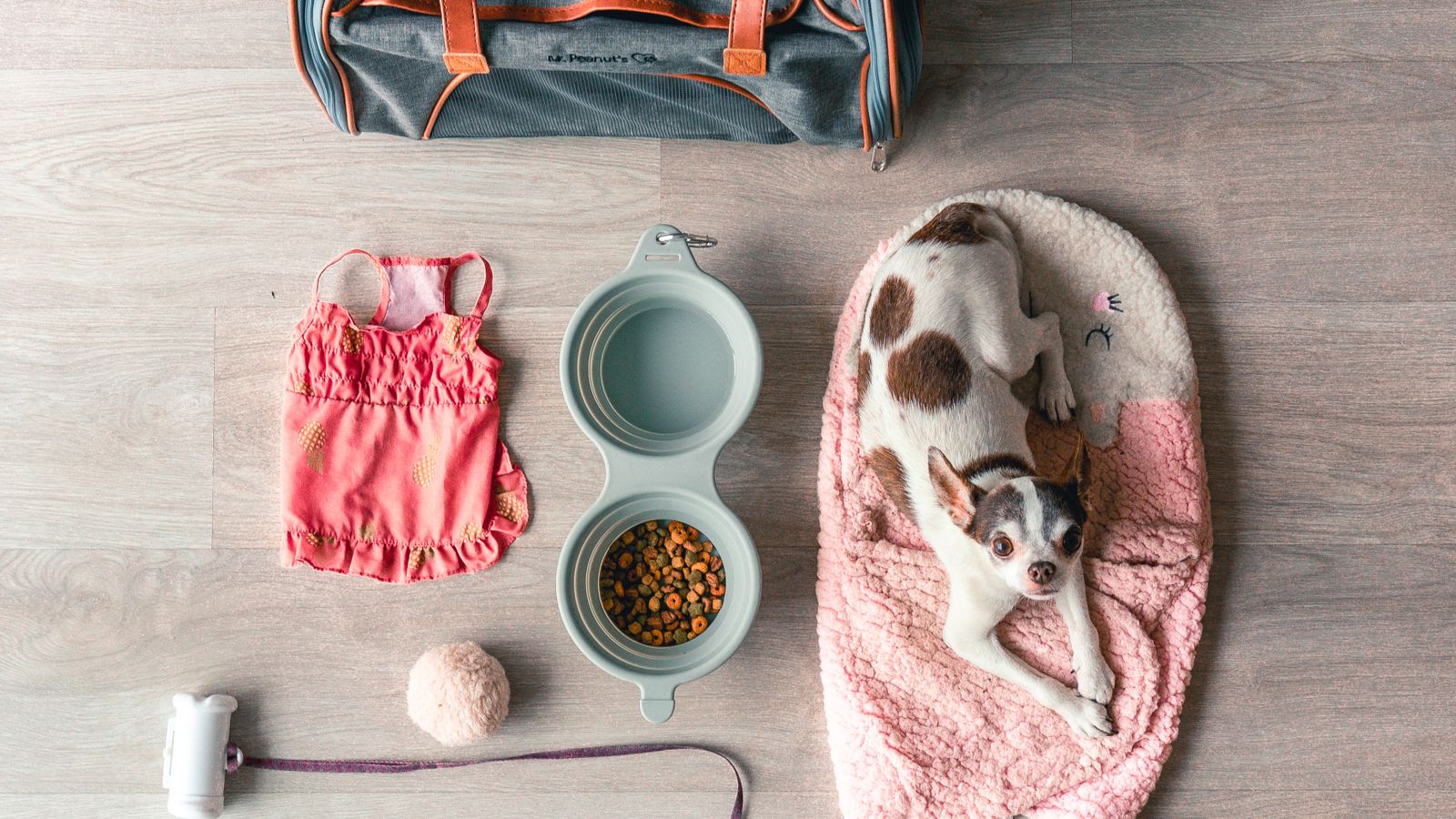
Food and feeding gear
Food is the one purchase where getting it wrong has medical consequences rather than just financial ones.
- Match the life stage. Puppy and kitten food is genuinely different from adult food in calorie density and nutrient balance. Senior formulas matter less than portion control, but they help in specific conditions.
- Look for a complete diet, not a claim. "Premium", "holistic" and "natural" are marketing terms. What matters is whether the label states it meets a recognised nutrient profile for the species and life stage. Cats in particular need taurine, arachidonic acid and preformed vitamin A — a vegetarian cat food is not a valid diet.
- Portion by weight, not by scoop. Use a kitchen scale for a week and you will discover your scoop is wrong. The food calculator gives you grams per day from your pet's actual weight and activity.
- Transition slowly. Change over seven to ten days, mixing increasing amounts of the new food, or you will be cleaning up diarrhoea.
- Storage. Keep dry food in the original bag inside an airtight container, and use it within about six weeks of opening. Fats go rancid, and a big bag of cheap food that goes stale is not a saving.
On bowls: stainless steel or ceramic, wide and shallow. Plastic scratches, harbours bacteria, and is a common cause of feline chin acne. For cats, a shallow wide bowl matters because many dislike their whiskers touching the sides — and raised bowls help older large dogs eat without straining the neck.
Crates, beds and carriers
- Crates: buy for the adult size. The crate must be tall enough to stand without ducking, long enough to lie flat, and wide enough to turn around. A too-large crate defeats house training, so use a divider panel and grow the space as the puppy grows.
- Crates are not punishment. Fed in it, rewarded in it, left open during the day, the crate becomes the place the dog chooses to sleep. That is what makes travel and vet visits easy for the next decade.
- Beds: washability beats shape. Anything that cannot go in a washing machine will smell within a year. Buy one with a removable cover, and expect a chewer to destroy it — cheap and replaceable beats expensive and destroyed.
- Carriers for cats: hard-sided and front-opening. Soft bags look kinder but collapse, which terrifies an already frightened cat. Leave the carrier out permanently with a blanket inside so it is furniture rather than a signal that something bad is about to happen.
- Car safety is not optional. A crate secured with a seatbelt, or a properly crash-tested harness, is the difference between a scare and a catastrophe at 50 mph. A loose dog in a car is a projectile.
Toys: fewer, better, rotated
Most pets are bored by an overflowing toy box and re-interested in anything that disappears for a week. Rotate three or four at a time and the novelty does the work for you.
- Match the toy to the chewer. Rubber toys rated for "power chewers" are made of a different compound. If a toy is hard enough that you cannot dent it with a fingernail, it is hard enough to crack a tooth — that includes antlers, hooves and hard nylon bones.
- Rope toys and string are supervised-only. Swallowed strands cause linear foreign bodies, which are expensive surgery and genuinely dangerous, especially in cats.
- Squeakers come out. Any toy with a squeaker inside is a choking hazard once the seam gives, and it always gives.
- Play with your pet, don't just hand them things. Wand toys, fetch, tug and food puzzles build the relationship and burn energy. A toy on the floor alone is not enrichment. The dog care and cat care pages cover how much activity each species actually needs.
- Food puzzles earn their keep. A puzzle feeder turns a two-minute meal into twenty minutes of work and is one of the cheapest behavioural tools available.
Collars, harnesses and identification
- Id tags plus a microchip. A collar can fall off; a chip cannot. Both is the correct answer, and the chip is only useful if your contact details in the registry are current.
- Harness over collar for walking. A flat collar is fine for identification but damaging for a dog that pulls. A well-fitted front-clip or Y-shaped harness distributes pressure across the chest instead of the throat. Skip anything that tightens across the neck or restricts the shoulders.
- Fit is the whole product. Two fingers should fit under a collar, and you should be able to get a flat hand under a harness strap. Chafing under the front legs usually means the harness is the wrong shape for your dog, not that your dog is difficult.
- Breakaway collars for cats. A cat's collar must release under load, because cats climb and get snagged. Reflective or quick-release designs cost the same as the dangerous kind.
Litter and litter trays
- Tray size matters more than litter brand. Aim for one and a half times the length of your cat from nose to tail base — most commercial trays are too small, and cats tell you so by going elsewhere.
- Open, not hooded. A lid traps odour and leaves one escape route. Anxious cats, and cats in multi-cat homes, often refuse lidded boxes.
- Unscented, clumping litter suits most cats. Scented litters and liners solve a human problem at the cat's expense.
- Scoop daily, full change weekly, and wash the tray with unscented soap. Ammonia-based cleaners leave a smell that invites repeat marking.
- Automatic boxes are a trade-off. They help if you travel, but they can fail silently and the motor noise puts some cats off. Check them daily even if they self-clean.
Grooming tools worth owning
- Match the tool to the coat. A rubber curry for short coats, an undercoat rake for double coats, a slicker and metal comb for curly coats, hand-stripping or clippers for wire coats. Buying the wrong brush is why brushing seems useless.
- Nail clippers, and know where the quick is. A guillotine clipper for cats and small dogs, scissor or plier type for larger. Take tiny slivers, and have styptic powder on hand the first few times.
- Dog toothpaste and a finger brush. Human toothpaste is toxic to pets — the fluoride and the xylitol both. Enzymatic pet paste costs a few dollars and is the single highest-value grooming purchase you will make.
- A flea comb for detecting fleas early, and for checking a cat's coat for mats and scabs.
- Skip the grooming gloves, the de-shedding blades that cut the coat, and anything marketed as a "no-brush" solution. They mostly do not work.
Health and first-aid kit
A small kit is worth assembling before you need it, because emergencies never happen at a convenient hour. Reasonable contents:
- Digital thermometer and a water-based lubricant
- Sterile gauze swabs, self-adhesive bandage, medical tape
- Saline for flushing wounds and eyes
- Antiseptic solution suitable for pets, not alcohol or hydrogen peroxide
- Blunt-ended tweezers and tick-removal tool
- Styptic powder for nails
- Muzzle or a length of soft cloth — an injured pet may bite even if it never has before
- A foil blanket for shock and warmth
- Your vet's number, the nearest 24-hour emergency clinic, and a pet poison helpline
What not to keep in it: human painkillers. Paracetamol and ibuprofen are toxic to both dogs and cats, and paracetamol is lethal to cats at a dose a human would take without thinking. The pet health page lists the household poisons worth knowing.
Where cheap gear costs more
A few specific places where saving money is a false economy:
- Cheap harnesses and clips that fail mid-walk near a road
- Non-breakaway cat collars, which are a strangulation risk
- Hard chew toys that crack teeth — a dental extraction costs far more than the toy
- Rawhide and cooked bones, associated with choking and blockages
- Retractable leads near roads, which offer no control and cause a large share of bite incidents
- Unverified supplements, which are loosely regulated and occasionally harmful
- Undersized litter trays, which produce behaviour problems that no amount of training fixes
What to buy first
If you are setting up for a new pet and the list looks endless, this is the order that matters. The pet cost page covers what the whole setup actually comes to, and the calculator gives you a first-year figure for your situation.
- Food appropriate to the life stage, plus a kitchen scale and a measuring cup
- A correctly sized crate or carrier, and a washable bed
- A fitted harness and a fixed-length lead (or, for a cat, a secure carrier and a breakaway collar)
- Id tag and microchip registration in your name
- Stainless or ceramic bowls — two, one for water and one for food, kept apart for cats
- A litter tray sized for an adult cat, plus one more per additional cat
- Two or three toys matched to species and chewing style, plus one food puzzle
- Toothbrush and enzymatic pet toothpaste
- A basic first-aid kit and your vet's emergency number saved in your phone
Everything else — the third bed, the seasonal costume, the second toy basket — can wait until you know what your particular animal actually likes. Most of it, you will find, they do not.
General buying guidance, not veterinary advice, and not a recommendation of any brand or retailer. Ask your vet about diet, chew toys and supplements for your specific pet, particularly after dental work or surgery.