A healthy dog is mostly a routine. The right amount of food, enough movement, teeth that get cleaned, and a vet who sees them before something goes wrong. None of it is difficult, but all of it works better when it is steady rather than occasional.
This page covers the everyday basics: how much to feed, how much to walk, what to groom, which preventives actually matter, and the signals that mean you should stop reading and call a vet.
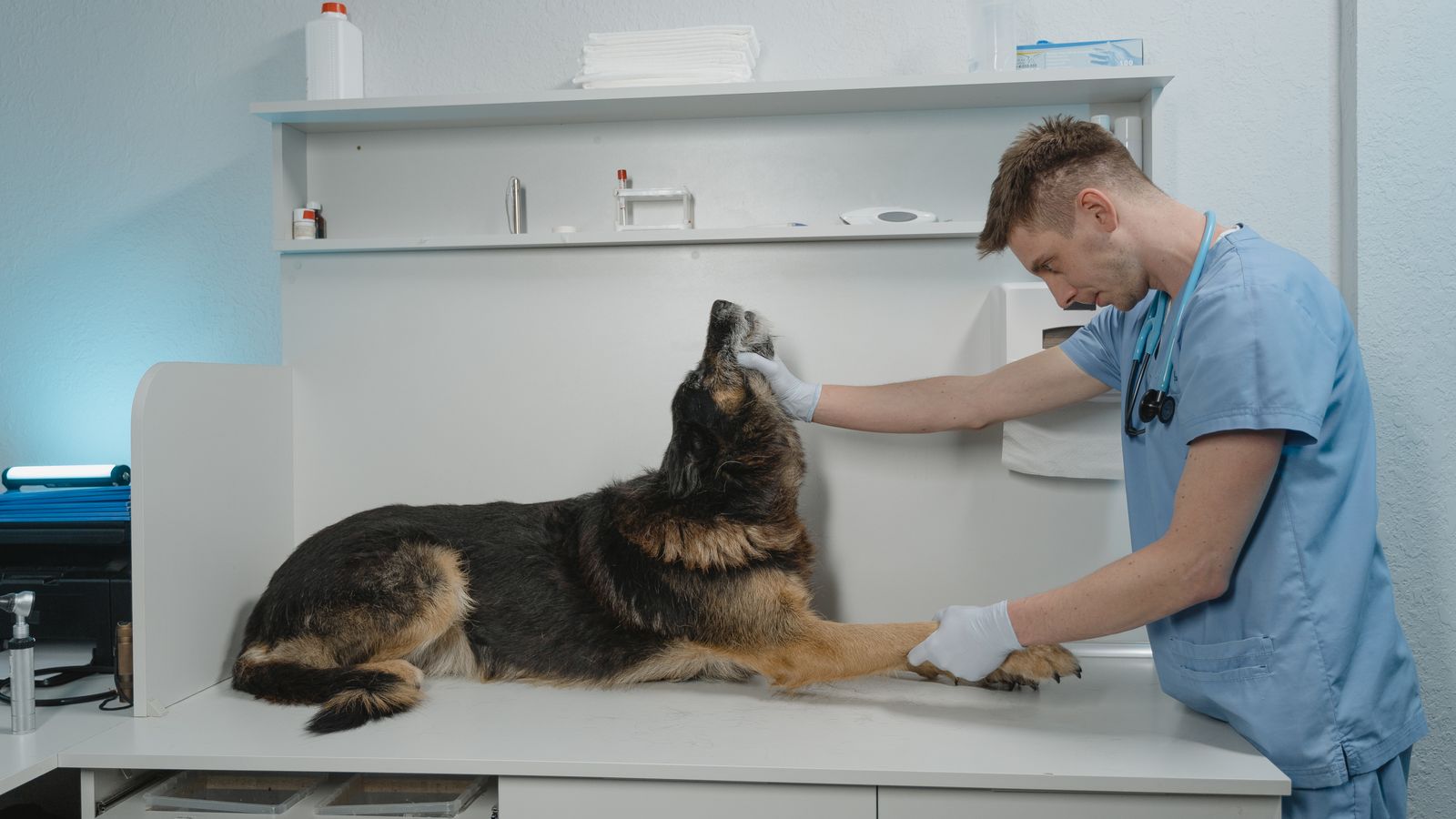
Start with the life stage
Dogs of different ages need genuinely different care, so it helps to know which stage you are in. Size matters here: a Chihuahua is still middle-aged at seven, while a Great Dane of the same age is already senior. A one-year-old dog is roughly a teenager in human terms; a two-year-old is a young adult.
If you are not sure which stage your dog is in, the Dog Age Calculator converts their age using the size-based formula. It takes about ten seconds and makes the rest of this page easier to apply.
Feeding
The feeding chart on the bag is a starting point, not an instruction. Those ranges are wide because they cover every dog of that weight, from a couch potato to a working collie. What actually determines the portion is body weight, life stage, and how much your dog moves.
The calculation vets use starts with resting energy requirement, the calories a dog would burn doing nothing at all:
- RER = 70 × (body weight in kg)0.75 — that is your dog's baseline
- Multiply it for life stage and activity: a neutered adult sits around 1.6×, a puppy under four months needs roughly 3×, a senior around 1.4×, and a highly active dog up to 2×
So a 10 kg (22 lb) neutered adult needs about 640 kcal a day. If your kibble is 3,500 kcal per kg, that is roughly 180 g, or about 1.6 standard 8 oz cups. The food calculator does this for your dog's exact weight, size and activity level.
Watch the body, not the scale
Numbers get you close; body condition gets you the rest of the way. Run your hands along the ribs — you should feel them easily under a thin layer of padding, without pressing. From above, there should be a visible waist behind the ribcage. From the side, the belly should tuck up toward the hind legs.
If the ribs are hard to find, cut the portion by about 10% and re-check in two weeks. If they are sharp and obvious, add 10%. Changes that slow are the ones that last.
What not to feed
Some everyday foods are genuinely dangerous for dogs. Keep this list in mind:
- Chocolate — the darker it is, the worse it is; baker's chocolate and cocoa powder are emergencies
- Xylitol — the sweetener in sugar-free gum, some peanut butters and baked goods; it can cause dangerous hypoglycemia within an hour
- Grapes and raisins — causes kidney failure in some dogs at unpredictable doses
- Onions, garlic, leeks, chives — damages red blood cells, and it adds up across meals
- Alcohol, raw yeast dough, macadamia nuts, mouldy food
- Cooked bones — they splinter; raw bones are a separate and much longer argument
Water
A healthy dog drinks roughly 0.5 to 1 oz of water per pound of body weight per day, with normal activity sitting around 0.75 oz/lb. A 40 lb dog therefore needs about 30 oz, or close to a litre.
Two things make this worth tracking. First, dogs on dry food drink noticeably more than dogs on wet food. Second, a sudden jump in drinking is a real clinical sign — it can point to diabetes, kidney problems or a uterine infection. If your dog is suddenly emptying the bowl and asking for more, that is a vet visit, not a heatwave.
The water intake calculator gives you the daily target in both ounces and millilitres.
Exercise
Most healthy adult dogs need somewhere between 30 and 120 minutes of activity a day, and the honest answer is that breed matters more than the number. A greyhound may be done after two hard sprints. A border collie will look at you like you have barely started.
Useful way to think about it by group:
- Working and herding breeds — collies, shepherds, huskies: 90 to 120 minutes, and ideally with a job to do
- Sporting breeds — retrievers, spaniels, pointers: 60 to 90 minutes, including off-lead running
- Terriers and most mixed breeds — 45 to 60 minutes
- Brachycephalic breeds — pugs, bulldogs, Boston terriers: 20 to 40 minutes, in cool parts of the day, and never pushed when breathing gets noisy
- Giant breeds — shorter and gentler, especially in the first 18 months while joints are still forming
Sniffing counts. A slow twenty-minute walk where your dog reads every lamppost is genuinely tiring and mentally satisfying, often more so than a fast march around the block.
Puppies: the five-minute rule
A rough guideline for growing dogs is about five minutes of structured walking per month of age, twice a day, until they are fully grown. The point is not fitness, it is protecting growth plates. Free play on soft ground is fine and self-limiting; forced running and long pavement walks are not.
Grooming
Grooming is hygiene plus a weekly health check you get for free, because you are running your hands over the whole dog. Coat type decides the schedule:
- Short, smooth coats — a rubber curry brush once a week, bath every 6 to 8 weeks at most
- Double coats — huskies, malamutes, shepherds: brush two to three times a week, and daily during the twice-yearly blowout. Never shave them; the coat insulates against heat as well as cold
- Curly and wool coats — poodles, doodles: brush every other day and book a professional groom every 6 to 8 weeks. These coats mat silently, and mats pull on skin
- Wire coats — terriers: hand-strip or clip every 8 to 12 weeks
Use a dog shampoo, not yours. Human shampoo is formulated at a different pH and strips the coat. And go easy on baths: too frequent washing removes the natural oils that keep skin healthy.
While you groom, check the ears and trim nails. Nails should not click on a hard floor. If you can hear them, they are too long, and long nails change how the foot lands, which eventually affects the whole leg.
Dental care
By age three, most dogs already have some degree of periodontal disease. It is the most common condition vets see, and it does not stay in the mouth — chronic dental infection is linked to heart and kidney problems.
What actually works, in order of effectiveness:
- Daily brushing with enzymatic dog toothpaste. This is the only method that reliably removes plaque from the gum line.
- VOHC-approved chews and dental diets — look for the Veterinary Oral Health Council seal, which means the claim was actually tested
- Professional cleaning under anaesthetic when your vet recommends it. Hand scaling without anaesthetic cannot clean below the gum line, which is where the disease lives.
Starting young makes brushing normal. Starting at eight years old with a sore mouth is much harder, and worth doing gradually.
Parasite prevention
Prevention is one of the few areas where the schedule really is standard. What you use depends on your region, but the rhythm looks like this:
| What | How often | Notes |
|---|---|---|
| Fleas | Monthly, year-round | Year-round matters indoors too; central heating keeps fleas active |
| Ticks | Monthly or as directed | Seasonal in cold climates, year-round in warm ones |
| Heartworm | Monthly, or a 6–12 month injection | Test before starting if there has been a gap in coverage |
| Intestinal worms | Every 1–3 months | More often for dogs around young children or raw food |
| Annual exam | Once a year | Twice a year from around age eight |
| Rabies | 1 or 3 years | Legally required in most places; interval is set by local law |
Puppies follow a compressed version: a series of vaccinations every two to four weeks until about sixteen weeks, then a booster at one year.
Training and enrichment
Behaviour problems, not infectious disease, are the most common reason dogs are surrendered. Almost all of it is preventable, and almost all of it is about unmet needs rather than a difficult dog.
- Socialise early. The sensitive window closes around sixteen weeks. Safe, positive exposure to different people, surfaces, sounds and friendly vaccinated dogs in that period pays off for the next decade.
- Train with rewards, not punishment. Force-based methods raise the odds of fear and aggression. Five short sessions of two minutes beats one twenty-minute slog.
- Give them something to do. Food puzzles, snuffle mats, a frozen stuffed toy. Ten minutes of scent work tires a dog more than a walk.
- Teach settling. A dog that can do nothing calmly on a mat is easier to live with than one that is always waiting for the next event.
Leaving them alone
Most adult dogs cope with four to six hours alone once they are used to it, but it has to be built up gradually, and puppies cannot hold their bladder anywhere near that long. As a rough guide, a puppy can manage about one hour per month of age, capped at four.
If your dog destroys things, vocalises for the whole time you are out, or toilets indoors despite being house-trained, that is worth looking at as separation-related distress rather than disobedience.
When to call a vet
Some things should not wait for a convenient appointment. Contact a vet the same day if you see:
- Repeated vomiting, or vomiting with a bloated, hard abdomen — bloat is a life-threatening emergency in deep-chested breeds
- Not eating for more than 24 hours, or refusing water at all
- Bloody or black, tarry stool; straining to pass stool with nothing coming out
- Struggling to urinate, especially in male dogs — this can be a fatal blockage within a day
- Collapse, seizure, disorientation, or a sudden inability to use the back legs
- Breathing that is fast or laboured at rest, or gums that look pale, blue or white
- Known or suspected ingestion of any item on the food list above
And call sooner than you think for: limping that lasts more than a couple of days, a cough that will not settle, new lumps, unexplained weight loss, or any sudden change in drinking and urination.
What it costs
Routine care is predictable, which is why it is worth budgeting rather than reacting. A small dog typically runs $500 to $1,500 a year including food, preventives and an annual exam; a large dog can reach $1,500 to $3,000 or more. The first year is higher because of vaccination, neutering and startup gear.
Two numbers surprise people. Dental cleaning under anaesthetic usually lands between $300 and $800. A single emergency visit can be $500 to $5,000. That gap is exactly why many owners either insure or keep a dedicated emergency fund.
The pet cost calculator breaks the yearly figure down by category, and the full cost guide explains what sits behind each line.
Senior dogs
Large breeds are often senior by six or seven, small breeds closer to ten. From that point, care shifts from prevention to early detection:
- Twice-yearly vet visits with bloodwork, rather than once a year
- Watch for the quiet changes: slower on stairs, hesitating to jump on the sofa, sleeping more, standing up stiffly
- Keep them lean. Excess weight is the single biggest modifiable factor in how comfortable old age is
- Raise food and water bowls if the neck is stiff, and add non-slip mats on hard floors
- Keep exercising, but shorter and more often. Muscle supports joints, and losing it accelerates decline
- Ask about pain relief before you think you need it. Dogs are good at hiding discomfort, and treating it early changes what the last years look like.
None of this requires special knowledge, just consistency. Feed to body condition, move them every day, brush their teeth, keep preventives current, and know which symptoms are emergencies. That routine covers most of what good dog care actually is.
General guidance only, based on commonly used veterinary practice. Feeding amounts, parasite products and vaccination intervals should be confirmed with your own vet, who knows your dog and your region.